


Change is Coming
Excellent ‘Martyn’s Law’ conference held yesterday within the ‘Blue Light’ exhibition event at Olympia. A good spread of speakers and a panel made up largely

The Minesafe system is designed for each vehicle as a demountable system for protecting the underside and wheel arches of utility vehicles.
It can be an enhancement to the underside blast protection of an armoured vehicle or as a specific kit for a soft skinned vehicles in a post conflict scenario.
For soft skinned vehicles the stiffness of the body has to be upgraded, which is best achieved through the use of a roll cage.
We can also advise on suitable blast mitigation seating and seatbelt combinations.

Because of the way in which XPT absorbs blast and dampens accelerations and the through transmission of energy, it is ideal for use on the underside of vehicles.
XPT is of particular benefit in confined spaces such as wheel arches where it will protect welded or folded joints from the blast shockwave. See our case study that clearly demonstrates this performance benefit here.
XPT for vehicles can be used with a backing armour to provide the mounting system, mechanical support and additional ballistic or fragmentation protection.


Fulesafe is an Armoured Fuel Can Holder. Long distance operations in the field often require additional supplies of fuel.
The ‘jerrycan’ is the universal tool for this job, but if such operations are in a hazardous environment the transportation of unprotected fuel on vehicle roof racks is an unnecessary risk. Tested with hand grenades, the Fuelsafe armoured jerrycan holder protects both petrol and diesel from close range explosive devices.


SJH Projects can advise on armour systems for both blast and ballistic applications. The optimum armour is a choice based on a wide range of factors including weight, cost, thickness, stiffness, environmental resistance and usability.
Applications covered include personnel, vehicles, maritime, airborne and static locations. Each has their specific demands and can be catered for from a wide range of material options.
There are different scales for measuring and specifying the performance of armour. The table shown on this page is the summary given in EN1063.

Vehicle blast protection is a critical aspect of military and security engineering, particularly in environments where threats such as buried landmines are prevalent. Landmines pose a significant danger to personnel and vehicles by detonating upon pressure or proximity, causing devastating damage through blast waves, fragmentation, and shock forces. Designing mine protection for vehicles to withstand such explosions involves a combination of engineering principles aimed at minimizing damage to the vehicle and maximizing occupant survivability. This threat can persist long after active combat operations have finished.
Buried landmines are explosive devices concealed underground, designed to detonate when triggered by pressure, magnetic influence, or proximity. The explosion generates a powerful upward blast wave, sometimes in conjunction with high-velocity fragments or explosively formed penetrators that can penetrate vehicle hulls, destroy tyres, and injure or kill occupants. The challenge lies in mitigating the effects of the blast, which include:
One of the most effective ways to protect a vehicle from buried landmines is through hull design. The V-shaped hull is a widely adopted configuration in mine-resistant vehicles. This shape deflects the blast wave away from the vehicle’s underside, reducing the force directly impacting the crew compartment. By redirecting the explosion’s energy outward, the V-hull decreases the likelihood of hull breach and internal damage.
The materials used in the construction of blast-resistant vehicles must absorb and dissipate energy efficiently. High-strength steel alloys, composite materials, and layered armour systems are common. Reinforced floors and underbody panels help prevent penetration by fragments and reduce deformation. Additionally, employing energy-absorbing structures, such as crushable materials or blast mats beneath the vehicle floor, can help dissipate the blast energy before it reaches occupants.
Increasing the distance between the vehicle’s hull and the ground is a vital principle in blast protection. Higher ground clearance reduces the intensity of the blast wave impacting the vehicle. By maximizing standoff distance, the vehicle receives a reduced shock load, which lowers the chances of hull rupture and occupant injury. This is why many mine-resistant vehicles have raised suspensions and large tires.
Protecting occupants inside the vehicle is as important as protecting the hull. Seats are often mounted on energy-absorbing shock mounts or suspended from the roof rather than fixed directly to the floor. This design reduces the transmission of blast forces and accelerations to the passengers, minimizing spinal and other internal injuries. Restraint systems such as multi-point harnesses are used to secure occupants safely during a blast event.
Modern vehicles incorporate additional technologies to enhance blast protection. For example, blast-resistant seats, floor mats designed to absorb energy, and modular armour kits allow customization based on threat levels. Advanced sensors and electronic systems can also detect mines and alert drivers to potential dangers, reducing the risk of encountering buried mines. Our blast protection material, XPT have been used on the underside and wheel arches of operational vehicles in Afghanistan for both the military and the UN.
Critical components such as fuel tanks, batteries, and ammunition storage are strategically placed away from the hull’s underside or protected by armour to reduce secondary explosions or fire hazards following a blast. The vehicle’s layout aims to isolate these vulnerable elements to protect occupants and maintain operational capability after an attack.
While the principles above offer significant protection, there are practical challenges. Increasing armour and ground clearance adds weight, which can impair vehicle mobility, fuel efficiency, and manoeuvrability. Designers must balance protection with operational requirements such as speed, payload capacity, and terrain adaptability.
Furthermore, no vehicle can be made fully blast-proof; extreme or very close detonations can still cause catastrophic damage. Hence, vehicle blast protection is part of a broader approach to threat mitigation, including route clearance, intelligence gathering, and tactics that minimize exposure to mines.
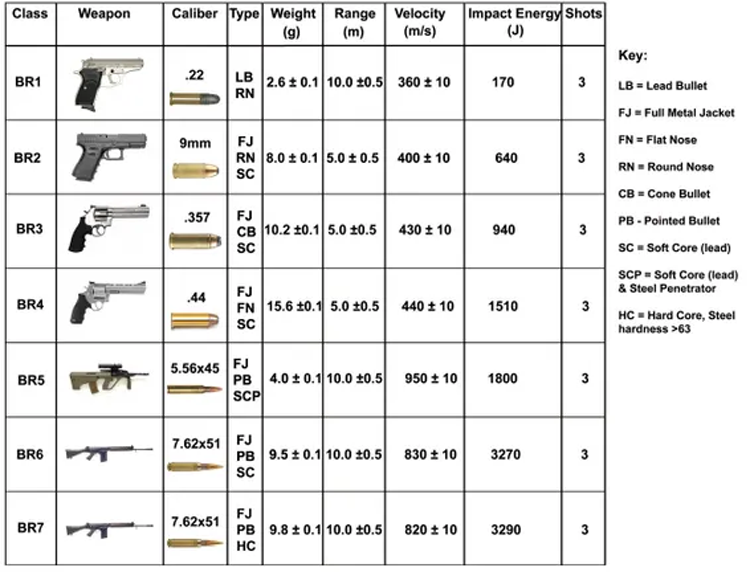
Click to Enlarge
Excellent ‘Martyn’s Law’ conference held yesterday within the ‘Blue Light’ exhibition event at Olympia. A good spread of speakers and a panel made up largely
Well done to the team at Level Peaks for organising another ‘Breacher’s Fest’ in a quiet corner of Cornwall. Doing the Detsafe demos inside the

Please to report that the Pint of Science festival allowed an engineer through the door to speak on their work. Steve Holland of SJH Projects

Automated page speed optimizations for fast site performance